

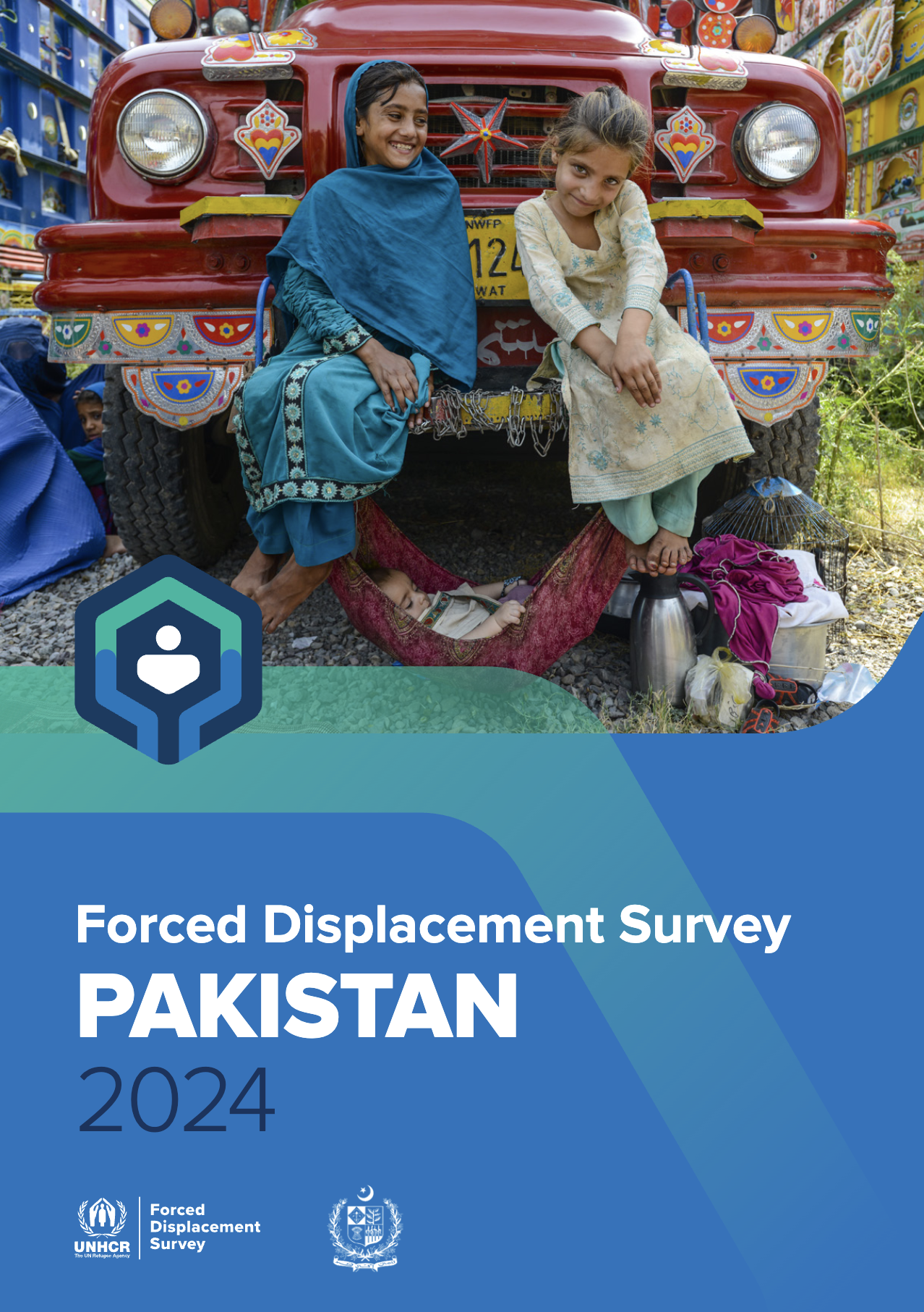
For more than four decades, Pakistan has hosted one of the world’s largest refugee populations, with Afghan families living across the country. Most Afghan refugees holding proof of registration cards reside in Khyber Pakhtunkhwa and Balochistan, provinces where public services and infrastructure face significant pressures. Against this backdrop, the 2024 Pakistan Forced Displacement Survey provides the first nationally representative assessment of the socioeconomic conditions of registered Afghan refugees and nearby host communities.
The survey provides a detailed picture of living conditions, vulnerabilities, and access to services. Findings show that both refugees and host communities experience substantial challenges related to poverty, limited access to basic services, and broader socioeconomic and environmental constraints. The refugee population is predominantly young, with high dependency ratios, and many households face inadequate food consumption, low levels of school completion, and constrained access to healthcare.
The data also highlights disparities between refugees and host communities. Refugees experience significantly higher levels of multidimensional poverty, persistent gaps in legal identity documentation, restricted access to formal employment and financial services, and heightened risks for women and girls, including child marriage and barriers to education.
As UNHCR’s flagship household survey, the Forced Displacement Survey is aligned with international statistical standards and designed to provide comparable, policy-relevant data across countries and over time. In Pakistan, the results provide a robust evidence base to inform government decision-making and support the design and implementation of policies and programs that strengthen protection, improve service delivery, and support sustainable solutions for refugees and the communities that host them.
The survey and report were developed with financial and technical support from the World Bank–UNHCR Joint Data Center on Forced Displacement.