
The JDC Marketplace on Forced Displacement Research
September 18-19, 2025 International Institute of Humanitarian Law | Sanremo, Italy
The JDC Marketplace will bridge the critical gap between policy needs and research expertise with the first transparent marketplace dedicated exclusively to forced displacement.
To start building momentum around this initiative and facilitate new opportunities for dialogue between researchers and policymakers, the JDC organized an in-person event in collaboration with the International Institute of Humanitarian Law. The event focused on building connections between practitioners, policymakers, and researchers, defining joint research objectives, and shaping proposals that address the operational needs of forced displacement.
Subscribe to our newsletter and don't miss the launch
The Platform
As part of its “Knowledge Agenda”, the World Bank – UNHCR Joint Data Center on Forced Displacement (JDC) is currently designing a new tool, the “Marketplace”, for stimulating the collaboration between researchers and policymakers and the production of operationally relevant research.
The Marketplace will ultimately provide a transparent virtual space in which all stakeholders (policymakers, practitioners, donors, etc.) can articulate their data and evidence needs to inform their response to forced displacement; and where researchers can explore these demands and propose their expertise to address these needs.
The platform will be a dynamic ecosystem where researchers and policymakers can connect and co-create solutions. It can then be further enriched with several features including, for example: a page to consolidate other research-related opportunities (conferences, events, grants, special issues, etc.); a searchable page to list registered researchers (“the supply”); a searchable page to list registered policy institutions (“the demand”); an open virtual space to facilitate communication and exchanges. Moreover, it can also feature elements to foster its effective use, such as email alerts based on keywords for anyone with an active registration to the platform.
While similar initiatives already exist, to our knowledge, there is no such platform dedicated to forced displacement. This makes its establishment particularly urgent, in a period in which forced displacement is at an all-time high, presenting complex challenges that demand innovative and evidence-informed solutions in a context of declining resources, including for research.
Use the right-sided arrow in the image below to explore the JDC presentation on how the marketplace fits into its strategic priorities.


The Event
Day 1 – “Listen, Discuss, and Reflect”
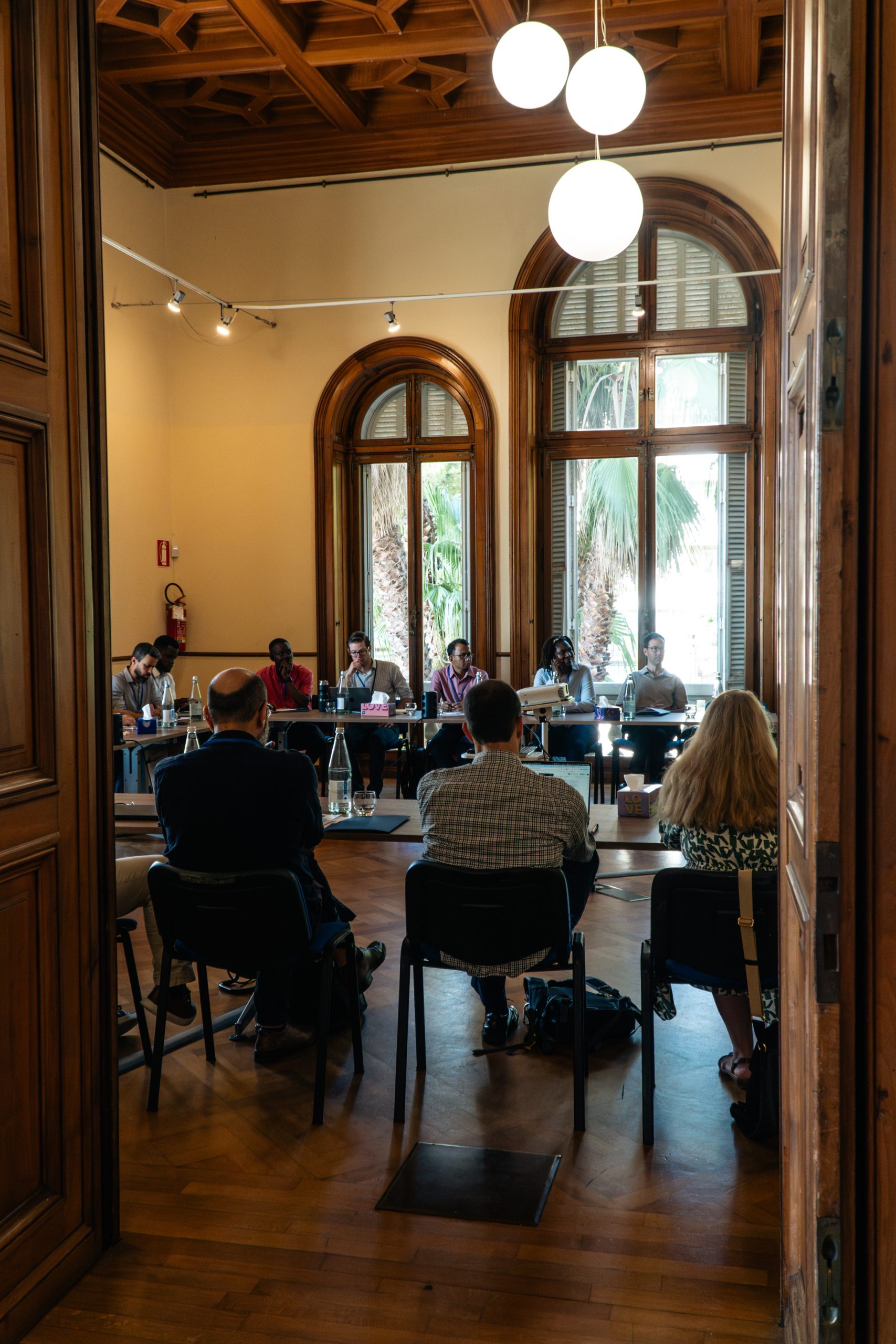
The Marketplace event started with several “conference-like” sessions, during which both policymakers and researchers highlighted, through practical examples, the role and importance of collaborations between them and the value of data and evidence in shaping effective policies.

Aissatou Maisha Dicko, the Head of the JDC, introduces the event.
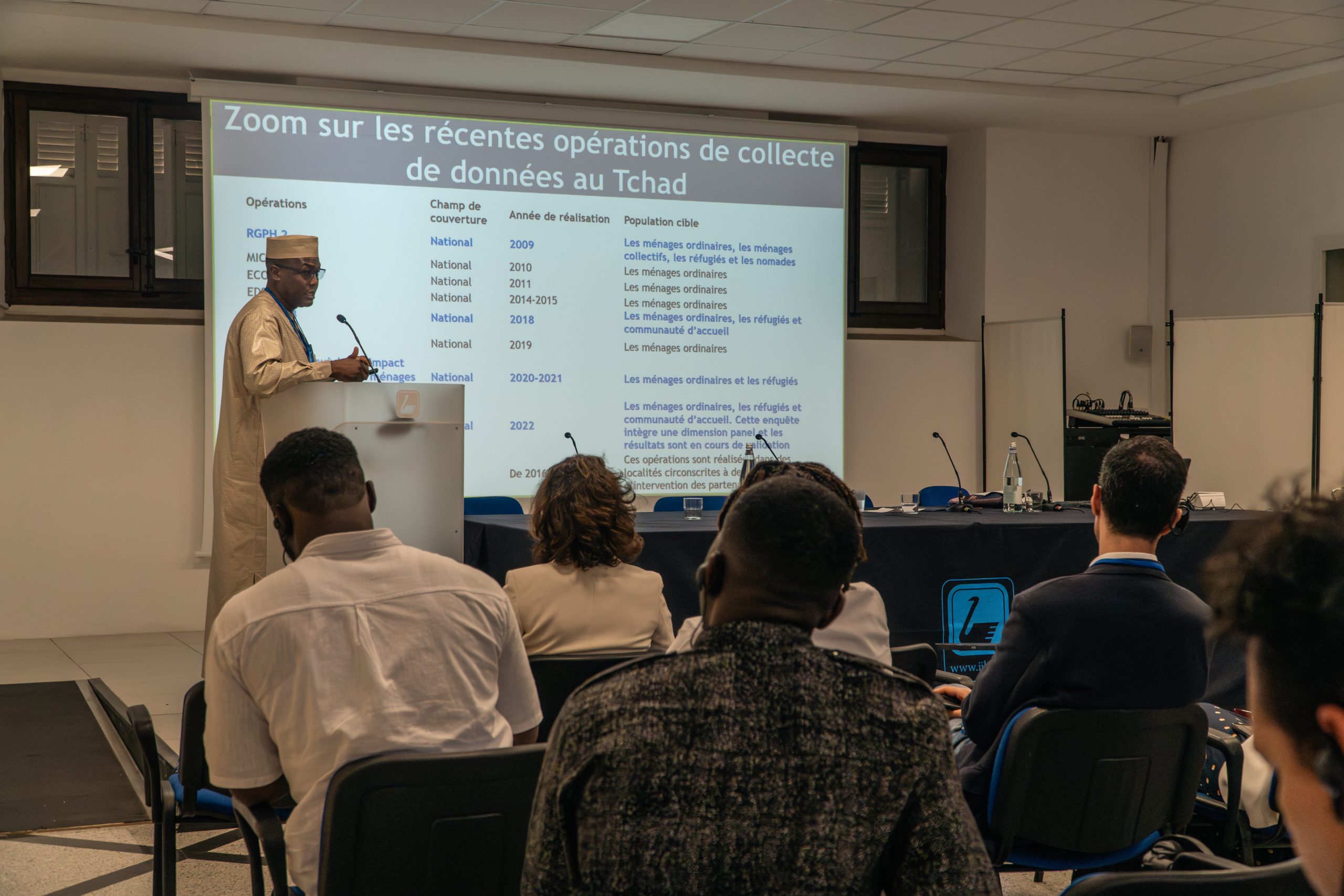
After two simultaneous introductory sessions that served the purpose of setting the scene for each group of attendees, the event proceeded with a series of presentations in plenum. Specifically, after an introduction by Aissatou Maisha Dicko, the Head of the JDC, the event featured a presentation by Ahmat Abderahim Abbo, Secretary-General for Economy, Planning, and International Cooperation in the Ministry of Finance of the Government of Chad.
During his intervention Mr. Abbo described the way in which Chad has been collecting data on refugees as part of their national statistics over several years; and how this data is used to inform policies. He indicated how, through its data collections, Chad pursues three policy-relevant objectives: a) evaluate needs and vulnerabilities of refugees; b) facilitate their access to civil rights and basic services; and c) establish a reliable base of data to foster the planification of humanitarian activities. Effectively, the data collected so far has been instrumental in designing, implementing and fine-tuning important interventions, such as the Refugees and Host Communities Support Project (PARCA), and the response to the COVID-19 pandemic. Importantly, he also highlighted the need for more research to support the Government in its attempt to move refugees out of camps and include them in the local community: an aspect that he was able to discuss at length with researchers in the remainder of the event.
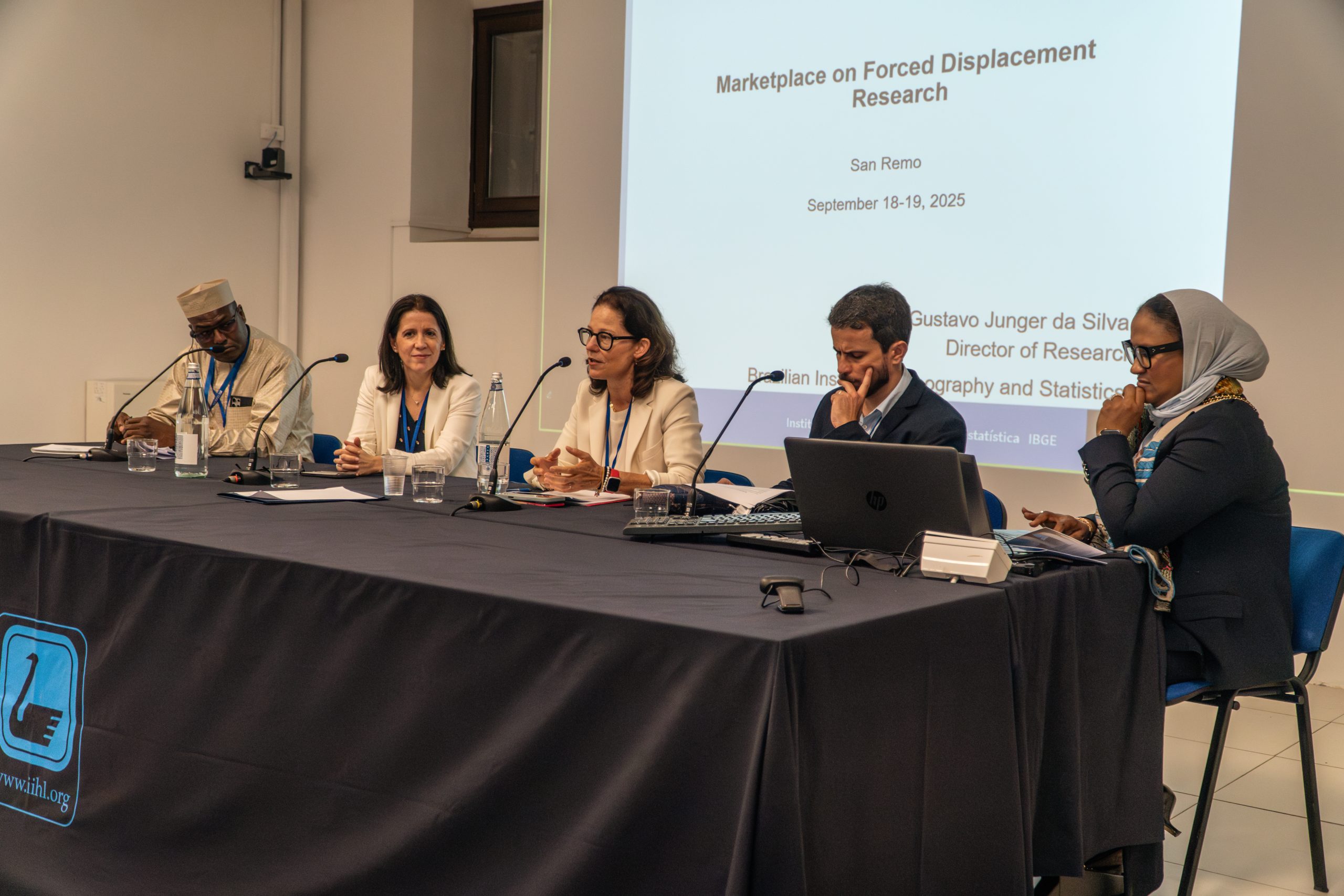
The event also had a panel with Mr. Abbo; Elizabeth Eyster, Head of UNHCR’s Sustainable Responses Service; Maria Eugenia Genoni, Lead Economist in the Poverty and Equity Global Practice of the World Bank; and Gustavo Junger, Director of Surveys, Brazilian Institute of Geography and Statistics. The speakers discussed the World Bank´s recent global poverty analysis and recommendations, and its traction with policymakers; UNHCR´s sustainable responses approach in support of inclusive policies and greater self-reliance of forcibly displaced; and, the Government of Brazil`s use of data for policies including at the sub-national levels. The panel provided an opportunity to reflect on some of the most recent policy developments relevant to forced displacement, as in the case of the Royal Thai Government’s resolution on refugees’ right to work. It also indicated how bringing credible data and evidence into the country-level policy dialogues is critical, for example, in facilitating the move from systems of parallel service delivery to more inclusive and sustainable models. The inclusion of forcibly displaced people in national statistical systems emerged as a pivotal element to enable more policy-informed decision. This was exemplified by the case of Brazil. The work that the Brazilian National Statistical Office conducted in collecting data on Venezuelans refugees and migrants, including in hard-to-reach areas, directly fed into policy decisions related to their inclusion in basic services such as education and health and also access to labor markets, showcasing once more the direct link between data and policy. At the same time, the panelists indicated some of the challenges that all involved parties encountered in the design of evidence-informed policies and how they sought to overcome them. This is particularly relevant in fragile contexts, in which multiple crises intersect and compound each other.
Two presentations on how to practically move from evidence to policymaking brought the conversation closer to the objective of the event. During the first presentation, Toan Do, Lead Economist at the Research Department of the World Bank, emphasized that policy relevance is an outcome—much like a product—that emerges from an interactive and often lengthy iterative process. This process is necessary to translate evidence into actionable policies. Nessa Kenny, Associate Director for the Peace and Recovery Program of IPA, provided an overview of IPA’s products and program to support the design and delivery of policy-relevant evidence, with a specific reference to impact evaluation studies and unpacking IPA´s financing opportunities.
Finally, Maja Lazić, Deputy Head of the JDC, moderated a conversation between Guy Grossman, Professor of Global Politics and International Relations, University of Pennsylvania, and Jackline Wahba, Professor of Economics, University of Southampton. This conversation explored and reflected on the experience of researchers engaging in policy-oriented work. They provided examples of well-functioning collaborations, they spoke of common barriers and stressed the importance of listening to the needs and requirements of their policy counterparts and managing expectations.
Day 2 – “Conversations for Collaborations”

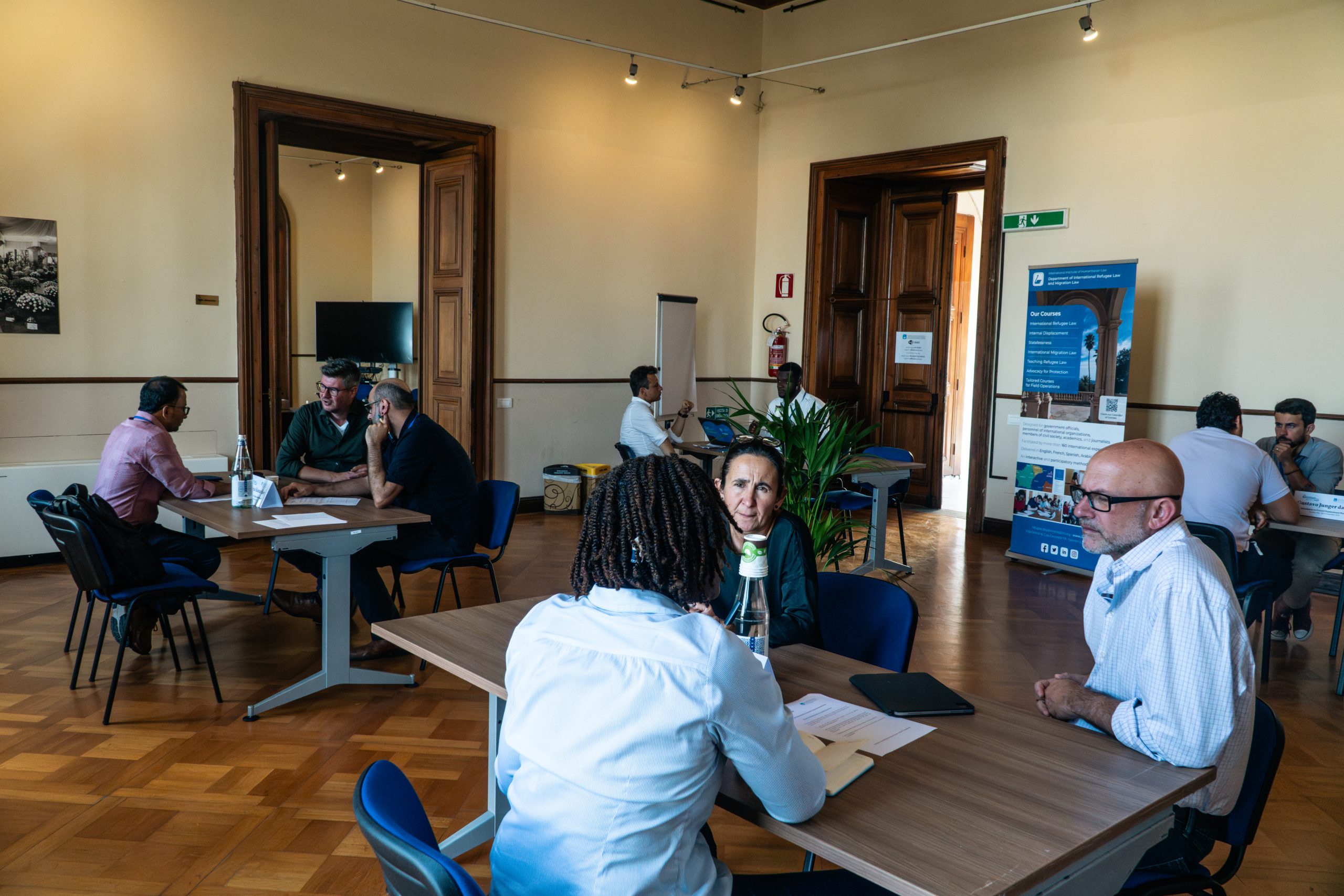
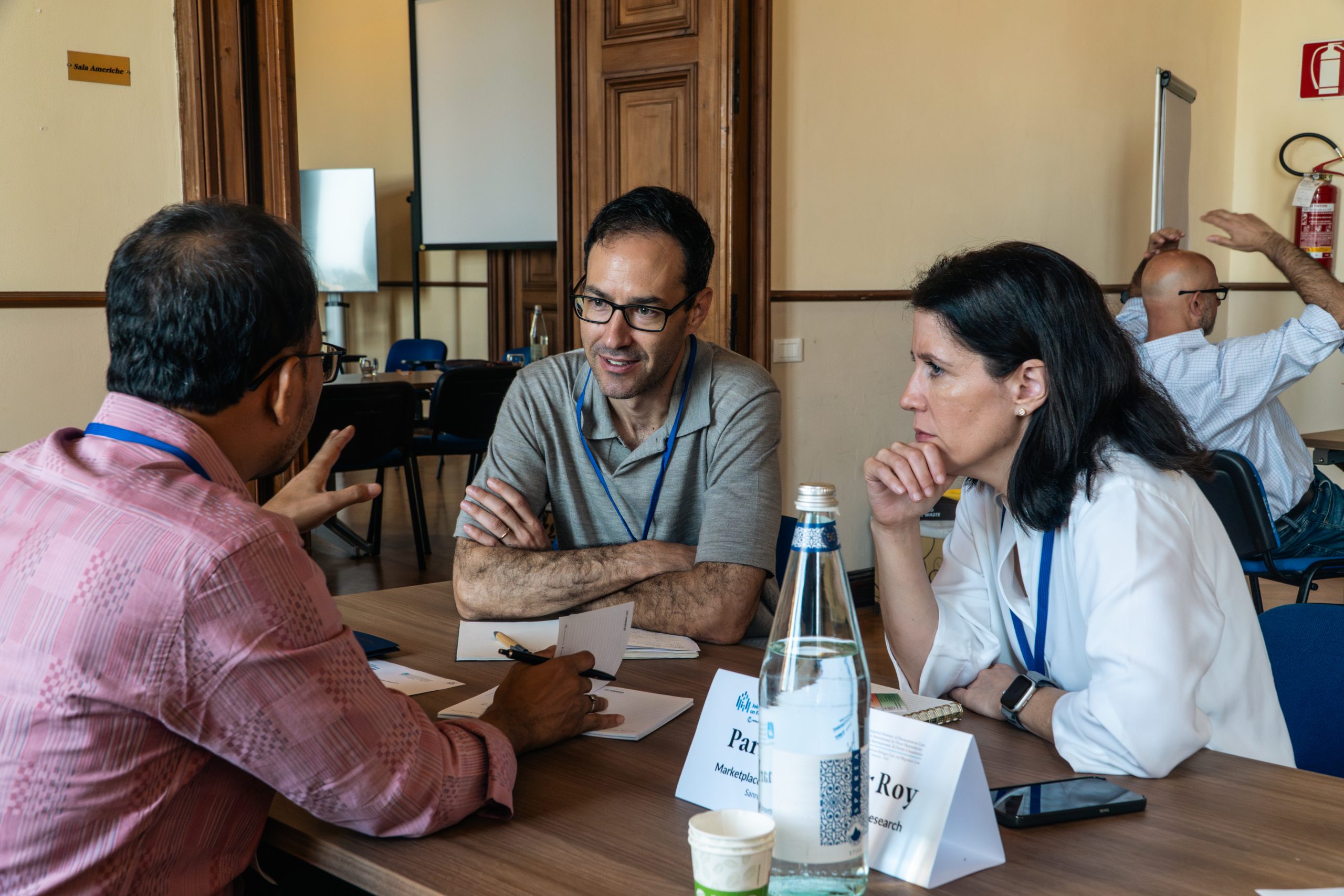
Researchers and policymakers discussed potential collaborations.
Equipped with the knowledge and insights from Day 1, the Marketplace participants shifted to interactive engagement. In the morning of Day 2, all participants took part in a round of fast, time-limited conversations. These short meetings (each of which lasted around 15 minutes) provided an opportunity for researchers and policymakers to get to know each other and to start exploring how research could be effectively used to address some of the operational and policy needs that characterize forced displacement in each of the countries represented in the event.
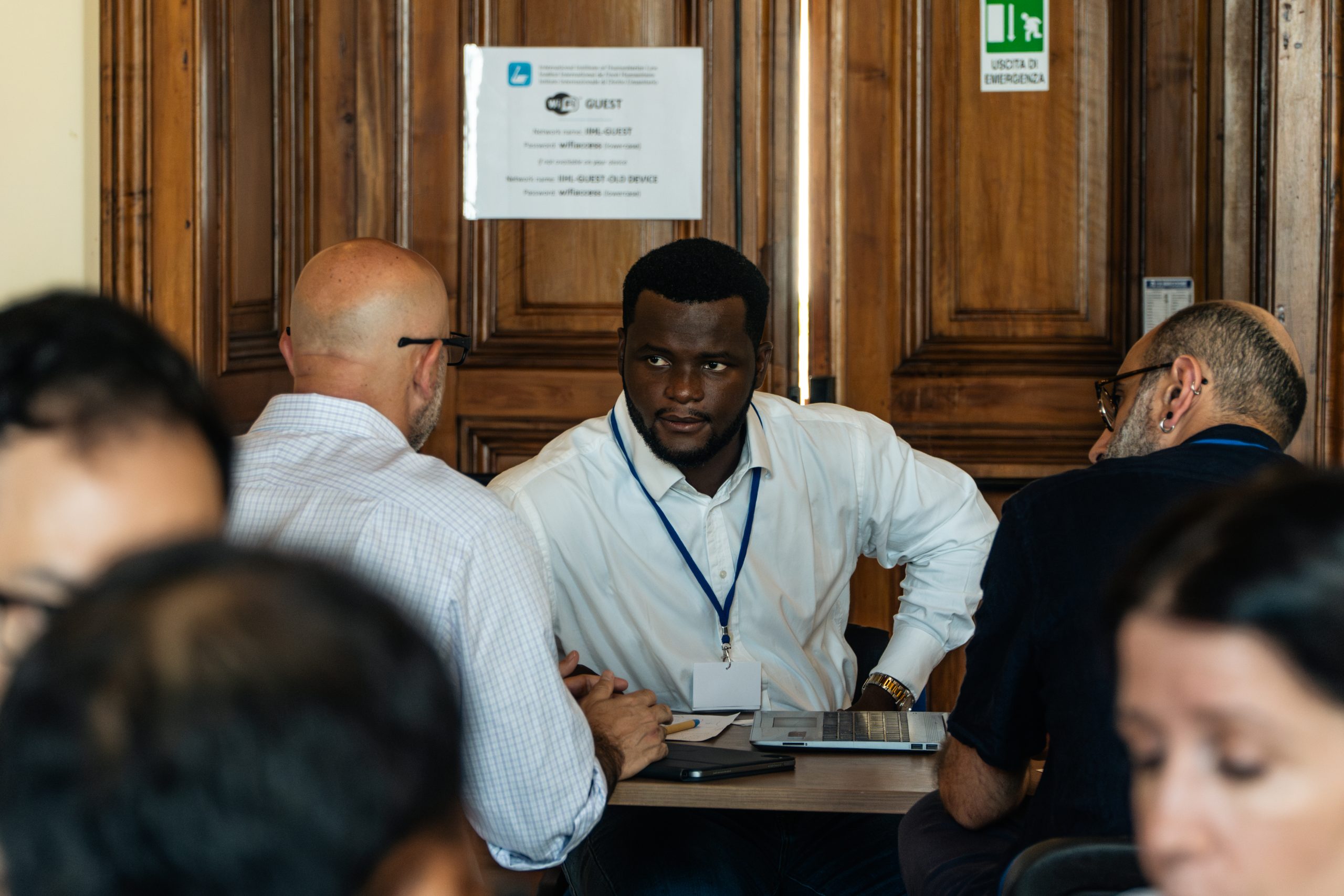
In the afternoon, participants engaged in longer, in-depth, conversations in which potential collaborations began to take shape.
This format allowed us to move from ideas to intent: from broad priorities to specific collaborations matched to real decision windows. In our rapid consultation rounds and deep dives, policymakers clarified evidence needs; researchers shaped feasible designs; and funders, such as the World Bank and IPA, mapped potential support.
Three outcomes stand out from the conversations:
1) Clarity of demand: The policymakers articulated their evidence needs in terms of questions, data, and timelines. This allows for designing research for maximum policy impact.
2) Feasible pathways: Many of the proposals discussed aimed to leverage existing data, embed measurements into operations, and align research milestones with policy calendars. This practical approach ensures that research is not only relevant but also timely and actionable.
3) Shared standard of relevance: A consensus emerged on the critical need for research to inform concrete decisions within defined timelines. This emphasis on “operational tests” ensures that research contributes directly to policy implementation and impact.
Moreover, policymakers of different countries were able to indicate clear research needs in several fields. Requests for collaborations with researchers were put forward in relation to: moving away from accommodating refugees in camps; economic inclusion models; analysis of the effectiveness of social programs; improvement in the frequency and quality of data on those forcibly displaced, etc.
About the event
The Event: Organization and Participation
The success of the Marketplace hinges on active usage by all stakeholders, and therefore on its capacity to host relevant and up-to-date proposals for research initiatives, and regular access by researchers and academics.
To increase the momentum around this initiative and facilitate new opportunities of dialogue between researchers and policymakers, the JDC organized an in-person event in collaboration with the International Institute of Humanitarian Law (IIHL). The event focused on building connections between practitioners, policymakers, and researchers, defining joint research objectives, and shaping proposals that address the operational needs in the context of forced displacement.
The collaboration with IIHL found its rationale in the wide network of policymakers linked to the IIHL´s Department of International Refugee Law and Migration Law. Such network was built through the Department’s considerable program for training, capacity-building, and horizontal sharing of experiences with government officials across many countries affected by forced displacement. These connections proved critical for the selection of policymakers from countries affected by forced displacement.
The two-day event was meticulously designed to move participants from broad ideas to concrete intentions. The first day featured presentations by both researchers and policymakers on both: the value and impact of collaborations focused on producing data and evidence for policymaking; and the role of quantitative research in the context of forced displacement. On the second day, concrete conversations between stakeholders materialized, first in rapid consultation rounds followed by more in-depth explorations. A detailed agenda can be found in Annex 1.
The event was attended by some 30 participants. The JDC purposefully decided to have a limited number of attendees to achieve an appropriate level of interaction among participants. In turn, this facilitated the building of relations, knowledge sharing and enabled in-depth conversations among different stakeholders.
Policymakers from Armenia, Bangladesh, Brazil, Chad, Côte d’Ivoire, Ethiopia, Ghana, and Zambia joined the Marketplace,1 and met with researchers and academics from a variety of research institutions2, the Innovations for Poverty Action (IPA) team, and with representatives from the World Bank and UNHCR. The richness and diversity of researchers and policymakers provided an interesting spectrum of experiences, perspectives and approaches.
Agenda
| Thursday, September 18 | |
|---|---|
| 10:00–11:00 |
Registration & welcome coffee |
| 11:00–12:00 |
Session 1: Parallel Sessions |
Session 1a (Policymakers): Data and Evidence for Policymaking
Aissatou Maisha Dicko, Head, Joint Data Center on Forced Displacement Maja Lazić, Deputy Head, Joint Data Center on Forced Displacement |
|
Session 1b (Researchers): Preparing for the Marketplace — expectations and objectives
Domenico Tabasso, Senior Economist, Joint Data Center on Forced Displacement |
|
| 12:00–13:00 |
Lunch break |
| 13:00–14:15 |
Session 2: Official Opening of the Event and Keynote IntroductionsWelcome and introductions: Aissatou Maisha Dicko (Head, JDC) and Claudio Delfabro (Director, Refugee Law & Migration Law Dept., IIHL) Keynote Presentation: S.G. Ahmat Abderahim Abbo, Secretary-General for Economy, Planning & International Cooperation, Chad Panel on Evidence for Policymaking: Experiences, perspectives, and opportunities — Moderated by Aissatou Maisha Dicko
S.G. Ahmat Abderahim Abbo Elizabeth Eyster, Head of the Sustainable Responses Service, UNHCR Gustavo Junger, Director of Surveys, Brazilian Institute of Geography and Statistics Maria Eugenia Genoni, Lead Economist, Poverty and Equity Global Practice, World Bank |
| 14:15–15:15 |
Session 3: From Evidence to Policymaking — Collaboration across Researchers, Policymakers, and Funding Bodies (Part I)Presentation 1: Quy-Toan Do, Lead Economist, Development Research Group, World Bank Presentation 2: Nessa Kenny, Associate Program Director for the Peace & Recovery Program, Innovation for Poverty Action |
| 15:15–15:45 |
Coffee break |
| 15:45–17:00 |
Session 3: From Evidence to Policymaking: Collaboration across Researchers, Policymakers, and Funding Bodies (Part II)Panel on How to Engage in Research for Policymaking Moderated by: Maja Lazić, Deputy Head, Joint Data Center on Forced Displacement Panelists: Guy Grossman, Professor of Global Politics and International Relations, University of Pennsylvania Jackline Wahba, Professor of Economics, University of Southampton Closing remarks: Aissatou Maisha Dicko |
| 19:30 |
Official dinner |
| Friday, September 19 | |
|---|---|
| 09:30–10:00 |
Session 4: Welcome and OverviewWelcome and recap from Day 1. Overview and expectations for Session 5. |
| 10:00–12:00 |
Session 5: Rapid Consultation RoundsA series of quick, focused consultations between researchers and policymakers enabling policymakers to present their evidence needs and researchers to propose solutions and explore potential partnerships. All participants are expected to engage actively in these exchanges, which are key to building meaningful connections and fostering future collaboration. |
| 12:00–13:30 |
Lunch break |
| 13:30–15:00 |
Session 6: Deep Dive DialoguesFollowing the speed dating format of the earlier session, this allows attendees to continue from earlier engagements in an informal setting and explore potential collaboration and next steps. |
| 15:00–15:30 |
Coffee break |
| 15:30–16:00 |
Closing of the Marketplace and Next StepsConcluding remarks: Aissatou Maisha Dicko (Head, JDC) and Claudio Delfabro (Director, Refugee Law & Migration Law Dept., IIHL) |
Participant Feedback
Overall, the Marketplace event participants’ feedback was overwhelmingly positive, with an average satisfaction rating of 8.8/10 based on filled feedback forms. Participants lauded the event for providing an excellent opportunity for concrete professional exchange and collaboration. Respondents unanimously confirmed that they would recommend the initiative to colleagues, reflecting the strong added value perceived.
Participants found the topics and exchanges highly relevant to their professional needs. Many pointed out that the Marketplace helped them gain exposure to best practices, learn from experiences in other contexts, and strengthen professional linkages. Other positive remarks related to the diversity of participants, the interactive nature of the sessions, and the possibility of engaging directly with peers and experts.
Regarding areas for improvement, the length of the Marketplace was the most frequently mentioned aspect. While a majority considered the duration adequate, several respondents found it too short and suggested extending the event to allow for deeper exploration of discussions and more meaningful interactions. A few also expressed interest in adding new elements such as additional presentations, panel discussions, or more dedicated time for thematic sessions.
Participants also expressed confidence in the applicability of what they had gained, with the majority stating that they would definitely or to a good extent use the knowledge and connections made during the Marketplace in their professional work.
Lessons learnt and way forward
Apart from the specific feedback discussed in the previous section, one more general remark emerged throughout the event as well as in the answers to the final survey. This relates to the need for the participants to get to know each other better for conversations to lead to more concrete results. Participants indicated that having dedicated sessions among researchers and among policymakers could have been a fruitful way for developing common strategies for addressing problems that may affect different countries in a similar way.
These remarks highlight how important a transparent and public approach to evidence-based policy making can be: by providing participants with more information the Marketplace can become even more effective in addressing forced displacement issues. In turn, this stresses the urgency of designing and publishing the online Marketplace platform. Such a virtual space in fact has the potential to facilitate the exchange of respective knowledge to enable the release of evidence-informed policies.
The positive comments, as well as the important suggestions received on how to make such an event more effective, will inform the way the JDC will continue working on the Marketplace. The efforts of the JDC will now concentrate on two main tasks:
- Sustaining Engagement: We will actively engage with the Sanremo participants to foster the concrete uptake of potential collaborations that emerged during the event. This will involve follow-up communications, facilitating connections, and providing support for nascent partnerships as needed.
- Developing the Marketplace Platform: We will continue to prioritize the development and subsequent delivery of the online Marketplace platform. This virtual space is essential for enabling ongoing knowledge exchange and facilitating the release of evidence-informed policies on a global scale.
Further inputs from all interested stakeholders, both around the virtual platform, and potential new in-person events, are welcome and will contribute to produce a more effective and impactful Marketplace.4
Gallery