

Publications and reports

Well-being and Labor Market Outcomes of Refugees in Malaysia
EnglishThis report is based on analysis of the Hosts and Refugees in the Malaysian Economy (HARMONY) Survey—the first systematic and detailed survey comparing refugee and host community households in Malaysia. A collaboration between UNHCR and the World Bank, this...
Malawi: Sixth Integrated Household Survey (IHS)
English The Sixth Integrated Household Survey (IHS6) is Malawi’s latest nationally representative household survey, conducted by the National Statistical Office (NSO) between July 2024 and July 2025. Implemented every three to four years, it provides comprehensive...
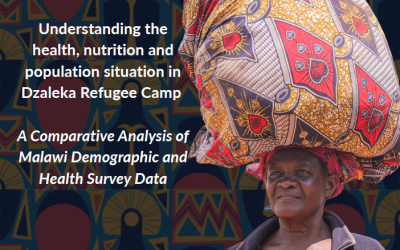
Malawi: Understanding the Health, Nutrition and Population Situation in Dzaleka Refugee Camp 2024
EnglishThis report takes a closer look at refugee health, nutrition, and population data in Malawi, building on Dzaleka Refugee Camp’s inclusion in the 2024 Malawi Demographic and Health Survey. Prepared jointly by Malawi’s National Statistical Office and UNHCR,...
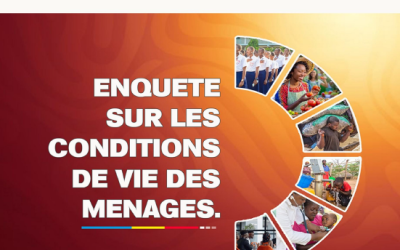
Democratic Republic of Congo: Household Living Conditions Survey 2024
FrenchThe Enquête sur les Conditions de Vie des Ménages (ECVM) 2024 is the Democratic Republic of the Congo's first nationally representative household survey in more than a decade. Led by the Institut National de la Statistique (INS), it provides updated evidence on...
Republic of Congo: The impacts of the Lisungi Project on refugees and host populations in Likouala
English Midline Analysis Report In Likouala, northern Republic of Congo, refugees make up around 60 percent of the population. The Lisungi Project, a national social protection program, was expanded to the department to reach vulnerable refugees,...
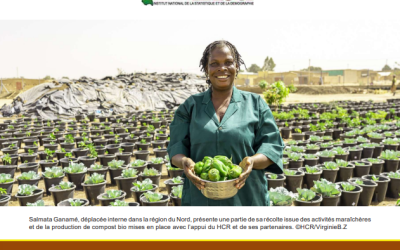
Burkina Faso: Enquête Socioéconomique et de Protection des Populations Déplacées Internes et des Communautés Hôtes (2025)
FrenchThe Enquête Socioéconomique et de Protection des Populations Déplacées Internes et des Communautés Hôtes (ESEP‑PDI) provides findings from one of the first integrated socioeconomic conditions, protection risks, and solutions survey...
Honduras: Permanent Multipurpose Household Survey (2024)
EspañolThe publication Resultados de la Encuesta Permanente de Hogares de Propósitos Múltiples (EPHPM) 2024 presents nationally representative evidence on people internally displaced by violence in Honduras. The report draws on data from the June 2024 round of the...
JDC Results Framework (2025)
EnglishThe Results Framework tracks progress against the Joint Data Centre on Forced Displacement (JDC) Strategy 2024–2027, across statistical inclusion, data and analysis, innovation, and the use of data in policy, planning, and responses. In 2025, progress continued...
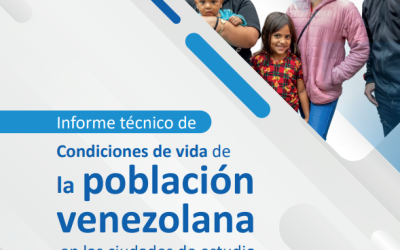
Peru: Living Condition of the Venezuelan Population in the cities under study (2024)
EspañolThe report ‘Condiciones de Vida de la Población Venezolana en el Perú’ (Spanish) provides a statistically representative and up‑to‑date assessment of the living conditions of Venezuelans residing in Peru’s main urban areas. Led by the Instituto Nacional...
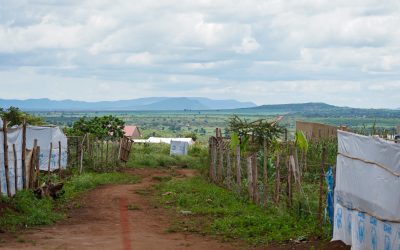
Uganda- Refugee Health Status Report, 2022
EnglishThe Refugee Health Status Report, based on the 2022 Uganda Demographic and Health Survey (UDHS), provides representative data on the living conditions and health outcomes of refugees in Uganda. Uganda hosts the largest refugee population in...