
4th JDC Research Conference on Forced Displacement

June 4-6, 2026 - Bangkok, Thailand. Venue: Chatrium Grand Bangkok

The World Bank – UNHCR Joint Data Center on Forced Displacement (JDC) is pleased to announce its 4th Research Conference on Forced Displacement, organized in collaboration with the Faculty of Economics of Chulalongkorn University, UNHCR, the UN Refugee Agency, and the World Bank.

The Research Conferences held so far have contributed to JDC’s objectives by providing an ideal space for stimulating the production of quantitative research on forced displacement, offering a platform for interaction between researchers and practitioners, and identifying thematic, population and geographical gaps in our knowledge on forced displacement.

We are happy to continue the important collaboration with our partners on filling evidence gaps on the forcibly displaced and stateless persons, with a specific focus on low- and middle-income countries.

The Conference will feature a combination of academic presentations, keynote note lectures and policy-oriented panels. The event seeks to address in particular the following topics:

1. Quantitative analysis of drivers and effects of self-reliance among the forcibly displaced, stateless people and the host communities.

2. Quantitative research on pathways to and the impact of economic inclusion of forcibly displaced and stateless people, including evidence on skills development, job integration, private sector investments, and entrepreneurship.

3. Socioeconomic evidence on the return of displaced populations, reintegration challenges, and durable solutions.

4. Methodological innovations in quantitative forced displacement research (e.g., sampling, data collection methods).

5. Operational and policy impact of data and evidence in displacement settings.

Program

All sessions are listed in Bangkok time (GMT +7). Watch on our YouTube channel.

All opinions and views expressed are those of the authors and panelists only, and do not necessarily reflect those of the Joint Data Center, its parent institutions, and other co-organizing partners.

Day 1: Thursday, June 4

Opening and welcome session (09:00 – 09:45)

Melinda Good, Division Director for Thailand and Myanmar, World Bank

Hai Kyung Jun, Regional Director for Asia and Pacific, UNHCR

Chettaphan Maksamphan, Deputy Permanent Secretary, Ministry of Foreign Affairs, Royal Thai Government

First keynote lecture (9:45 – 11:00)
Chair: Domenico Tabasso, World Bank – UNHCR Joint Data Center on Forced Displacement

Jean-François Maystadt, Research Associate Fonds de la Recherche Scientifique – FNRS, Professor at Economic School of Louvain, UCLouvain, and Senior Lecturer at Lancaster University, UK

The Political Impact of Refugees in Africa (Presentation)

Coffee Break (11:00 – 11:30)

First academic session: Effects of aid and aid cuts (11:30 – 13:00)
Chair: Jacqueline Strecker, UNHCR Thailand

Joaquin Endara (University of Michigan), Food Aid, Barter, and Money: Evidence from Rohingya Refugee Camps

Mae MacDonald (Stanford University), Examining the Link between Aid and Support for Refugees: U.S. Aid Cuts and Kakuma Camp, Kenya

Shelby Carvalho (Stanford University), Disrupted Aid, Displaced Lives: Unraveling the Impact of Refugee Aid Cuts

Lunch (13:00 – 14:00)

Second academic session: Socioeconomics effects in host countries (14:00-15:30)
Chair: Jerome Elie, Asia Displacement Solutions Platform

Sepehr Ekbatani (Khatam University), Burdens or Builders? Housing Market Effects of Afghan Refugees in Iran (Presentation)

Andrea C. Caflisch (IOM), Economic Recovery and Social Cohesion: A Field Experiment with Capital Grants in Post-War Iraq

Coffee Break (15:30 – 16:00)

Third academic session: Movements of refugees, IDPs and returnees (16:00 – 17:30)
Chair: Nodoka Hasegawa, IFC UNHCR Joint Initiative

María José Urbina (World Bank), Beyond Camps and Communities: The Economics of Refugee Relocation in Bangladesh (Presentation)

Miguel Ruiz (World Bank), War and internal displacement (Presentation)

Chen Fang (UNHCR), Determinants of Syrian Refugees’ Return (Presentation)

Policy panel 1: Returns (17:30 – 18:45)
Moderated by: Erin Felton, Senior Operations Coordination Specialist, Asian Development Bank

Faris Hadad-Zervos, Country Director for Afghanistan, World Bank

Karen Whiting, Head of Protection and Solutions Service, UNHCR Regional Bureau Asia and the Pacific

Klaus Dik Nielsen, Co-Secretary General, Asia Pacific Refugee Rights Network

Annalaura Maria Sacco, Strategic Partnership Adviser, UNHCR Syria

Ozong Agborsangaya-Fiteu, Chief Operations Officer and Transition Support Facility Coordinator, African Development Bank

Reception (18:45)


Day 2: Friday, June 5

Recap of Day 1: Quy-Toan Do, World Bank (09:00 – 9:15)

Policy panel 2: Self-reliance (9:15 – 11:00)
Moderated by: Elizabeth Eyster, Head, Sustainable Responses Service, UNHCR

Raouf Mazou, Assistant High Commissioner for Operations, UNHCR

Paskorn Boonyalug, Deputy Permanent Secretary of Interior/ Chief of the Operation Centre for Displaced Persons, Royal Thai Government

Ananya Basu, Deputy Director General, Climate Change and Sustainable Development Department, Asian Development Bank

Maria Eugenia Genoni, Lead Economist, Distributional Impacts Unit, World Bank Group

Coffee Break (11:00 – 11:30)

Fourth academic session: Development and economic inclusion (11:30 – 13:00)
Chair: Sailesh Tiwari, World Bank

Deboleena Rakshit (International Food Policy Research Institute), Displacement and Development: Evidence from a Graduation Program for Somalia’s Ultra-Poor (Presentation)

Sigrid Weber (IE University Madrid), Building Business Networks to Strengthen Refugee Economic and Social Integration (Presentation)

Dennis Kyalo (Inkomoko), Entrepreneurship as a Pathway to Economic Inclusion in Forced Displacement: What Drives Venture Creation? Evidence from Inkomoko in Rwanda (Presentation)

Lunch (13:00 – 14:15)

Strategic dialogue: Statistical inclusion (14:15 – 15:30)
Moderated by: Maja Lazić, Deputy Head, World Bank – UNHCR Joint Data Center on Forced Displacement

Olivier Dupriez, Deputy Chief Statistician and Advisor to the Development Data Group, World Bank

Rachael Beaven, Director of Statistics Division, UN Economic and Social Commission for Asia and the Pacific

Volker Schimmel, Head, Global Data Service, UNHCR

Winida Albertha, Senior Statistician, BPS-Statistics Indonesia

Coffee Break (15:30 – 16:00)

Fifth academic session: Conflict, mobility and household effects (16:00 – 17:30)
Chair: Katikar Tipayalai, Chulalongkorn University

Anna Gasten (University of Gottingen), Refugee Camps and Host-Community Migration: Evidence from Long-Term Individual Tracking Data (Presentation)

Richard Akresh (University of Illinois), Civil War and Household Structure: Evidence from Burundi

Steven Ndung’u (UNHCR), From Space to Settlements: Earth Observations for support prioritization and monitoring (Presentation)

End of Day 2


Day 3: Saturday, June 6

Recap of Day 2: Quy-Toan Do, World Bank (09:00 – 9:15)

Sixth academic session: Health and childhood in displacement settings (09:15 – 10:45)
Chair: Samuel David Cheung, UNHCR

Antonia Delius (University of Oxford), Depression, poverty, and cash: Experimental evidence from a refugee camp

Murat Kırdar (Koç University), Cash Transfers, Diet Quality, and Child Growth Among Refugee Children: Evidence from Turkey’s ESSN Program (Presentation)

Sandra V. Rozo (World Bank), Forcibly Displaced Childhoods: Longitudinal Evidence from Displaced Youth in Colombia

Coffee Break (10:45 – 11:00)

Second keynote lecture (11:00 – 12:15)
Chair: Quy-Toan Do, World Bank

Andrés Moya, Associate Professor in Economics at the Universidad de los Andes in Bogotá

Breaking the Cycle: Poverty and Mental Health among Forcibly Displaced Populations (Presentation)

Closing session (12:15 – 13:00)

Nopphol Witvorapong, Dean of the Faculty of Economics, Chulalongkorn University.

Tammi Sharpe, Representative in Thailand, UNHCR

Aissatou Maisha Dicko, Head, World Bank – UNHCR Joint Data Center on Forced Displacement

Lunch (13:00 – 14:00)

Speakers

Abul Azad

Aissatou Maisha Dicko

Aissatou Maisha Dicko is the Head of the Joint Data Center. She has over 18 years of operational experience with the World Bank in international development across the Middle East and North Africa, Sub-Saharan Africa, and Latin America. In her different roles she has led dialogues with government officials and partners, helping operationalize development policy. She has overseen the design of multi sector programs, built cross sector linkages, and optimized portfolios to drive results. Prior to joining the JDC, Aisha was supporting and overseeing the delivery and implementation of World Bank operations in Niger, the second largest World Bank portfolio in West and Central Africa.

Abul Azad

Ananya Basu

Ananya Basu is the Deputy Director General of the Climate Change and Sustainable Development Department at the Asian Development Bank (ADB). She joined ADB in April 2012 as a Senior Economist and then served as Senior Advisor to the Managing Director General. She the moved to the Pacific Department as Principal Economist, and in September 2020, was appointed Director. In 2022, she became Director of the Operations Planning and Coordination Division in the Strategy, Policy, and Partnerships Department. In this role, she provided strategic planning and policy direction, supported the mobilization and effective allocation of the Asian Development Fund and other resources, led on key strategy and policy documents, and maintained partnerships with the international development community.

Abul Azad

Andrés Moya

Andrés Moya is Associate Professor of Economics at the Universidad de los Andes in Bogotá, Colombia, and a Commissioner for the 2024–2025 Lancet Commission on Health, Conflict, and Forced Displacement. His research focuses on the consequences of conflict and forced displacement, including how these dynamics drive poverty through economic, psychological, and behavioral channels. He is affiliated with several research networks and contributes to ongoing work examining the displacement of Venezuelan refugees in Colombia, including the impacts of policies and programs to support their socioeconomic integration and longer-term outcomes.

Abul Azad

Annalaura Maria Sacco

Annalaura Maria Sacco serves as Strategic Partnership Advisor with UNHCR Syria, advising UNHCR leadership on engagement with government counterparts, UN agencies, and development partners. Previously, as UNHCR’s first secondee to the IMF, she advised on the macroeconomic and political implications of forced displacement, contributing to policy dialogue with member states and flagship IMF publications, including the World Economic Outlook and Regional Economic Outlooks. Her work strengthened approaches to fragile and conflict-affected contexts and was recognized with the IMF Departmental Outreach and Communication Award in 2025. Throughout her UNHCR career, she has held senior leadership roles across the Middle East and North Africa, West Africa, Europe, and headquarters operations.

Abul Azad

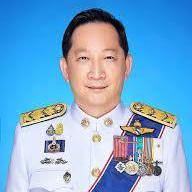
Chettaphan Maksamphan

Chettaphan Maksamphan is the Deputy Permanent Secretary, Ministry of Foreign Affairs, Royal Thai Government. In this role, he oversees the Department of International Economic Affairs, Department of International Organizations, Department of Asean Affairs, and Thailand International Cooperation Agency (TICA). He also serves as the Ministry’s Chief Information Officer (MCIO), playing a key role in advancing digital transformation and enhancing operation efficiency within the Ministry. Since joining the Ministry of Foreign Affairs in 1991, he has held key positions in bilateral, multilateral, consular, and public diplomacy. His domestic assignments include roles in numerous Government Departments, and internationally, he has served in New York Consulate-General (1995-1999), and the Royal Thai Embassies in Beijing, Vienna, and Warsaw (as Thai Ambassador to Poland and Ukraine between December 2019-March 2022).

Abul Azad

Elizabeth Eyster

Elizabeth Eyster currently serves as the Head of UNHCR’s Sustainable Responses Service, based in Geneva. She brings over 23 years of experience with UNHCR and has previously held several senior leadership roles, including Deputy Director of the Division of Resilience and Solutions in Geneva, UNHCR Representative in Mauritania (2022–2024), and Deputy Representative for Protection in Colombia (2020–2022). Her diverse career spans leadership of the Internal Displacement Section within the Division of International Protection, service as Deputy Representative in Tunisia, and a range of field assignments in locations such as Pakistan and Kosovo.

Abul Azad

Erin Chu Felton

Erin Chu Felton is a Senior Operations Coordination Specialist at the Asian Development Bank (ADB), working in the Fragile and Conflict-Affected Situations and Small Island Developing States Unit. Erin focuses on strengthening ADB’s institutional capacities and knowledge to respond to fragility, including advancing the forced displacement agenda and conflict-sensitive approaches across ADB operations. Prior to working in ADB, she served in different long-term advisory roles with government ministries Fiji, South Sudan, and Sierra Leone; as well as in health, education, and child protection sectors in over ten countries across Africa.

Abul Azad

Faris Hadad-Zervos

Faris Hadad-Zervos is the World Bank Country Director for Afghanistan. He has held senior leadership roles across the World Bank, including Country Director for Maldives, Nepal, and Sri Lanka, Country Manager for Nepal and Malaysia, and Head of the Global Knowledge and Research Hub in Kuala Lumpur. Since joining the World Bank in 1996, he has also served as Head of Mission for Iraq, Operations Manager for the West Bank and Gaza, and Country Manager for Bolivia. He was Deputy Head of the Quartet Office for the Middle East Peace Process and has lectured and published on economic development in conflict settings.

Abul Azad

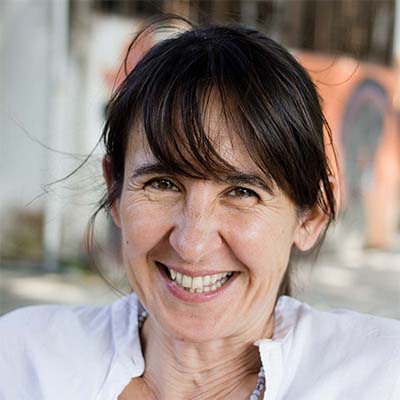
Hai Kyung Jun

Hai Kyung Jun is UNHCR Regional Director for Asia and the Pacific, based in Bangkok, a position she assumed in February 2024. Prior to this, she served as UNHCR Representative in the Republic of Korea (November 2022–January 2024) and in Myanmar (from 2020). She joined UNHCR in 2001 in Geneva and later held roles with UNICEF, including Donor Relations Specialist in Tokyo (until 2009), Senior Advisor in New York, and Representative in Chile (2014–2018). She also served as Director and Secretary of the UNICEF Executive Board before returning to UNHCR as Assistant Representative (Programme) in Afghanistan (2013–2014) and in advisory roles at headquarters.

Abul Azad

Jean-François Maystadt

Jean-François Maystadt is Research Associate at the Fonds de la Recherche Scientifique (FNRS), Professor at the Economic School of Louvain (UCLouvain), and Senior Lecturer at Lancaster University, UK. He is a development economist specializing in conflict, climate change, and migration, with a focus on the causes and consequences of conflict and forced displacement, particularly in developing countries. He has published extensively in leading academic journals and is currently an invited lecturer on the economics of conflict at Sciences Po, France.

Abul Azad

Karen Whiting

Karen Whiting is currently serving as the Head of the Protection and Solutions Service in UNHCR’s Regional Bureau for Asia and the Pacific, supporting UNHCR country operations in the region in the areas of protection and solutions. Prior to her posting in the Regional Bureau in Bangkok, Ms. Whiting worked with UNHCR’s country operations in Sri Lanka, the Democratic Republic of Congo, Jordan, the Republic of Türkiye, Iraq, Italy and Ukraine. She also worked on judicial engagement in the Europe Bureau in Brussels and headed the Child Protection & Youth Unit in the Division of International Protection in UNHCR Headquarters in Geneva.

Abul Azad

Klaus Dik Nielsen

Klaus Dik Nielsen is Co-Secretary General of the Asia Pacific Refugee Rights Network. He is an international human rights advocate and partnership builder with more than 20 years of experience advancing rights, social justice, and inclusion for minorities and marginalized communities. His work spans advocacy, partnerships, mobilization, and capacity-building, engaging civil society, governments, funders, the private sector, and UN agencies. He has held roles with Amnesty International (International Secretariat) and the Open Society Foundations, and has consulted with organizations including ActionAid Thailand, the People’s Empowerment Foundation, APCOM, OHCHR, and UNICEF.

Abul Azad

Maja Lazić

Maja Lazić is the Deputy Head of the Joint Data Center. Maja has over two decades of experience working in conflict, post-conflict, and emergency settings in the Balkans, Southeast Asia, and Central Asia with UNHCR, UN Human Rights (OHCHR), and non-governmental organizations. From 2018 to 2020, she was the Deputy Representative for UNHCR in Malaysia, where she worked towards the objectives of the Global Compact for Refugees and the UN Sustainable Development Goals. She has further served in UNHCR’s Headquarters in different policy and management capacities. While Maja’s professional experience is anchored in protection of the forcibly displaced and stateless populations, she also has experience in education, program oversight, public engagement, and donor and partner relations in humanitarian and development contexts.

Abul Azad

Maria Eugenia Genoni

Maria Eugenia Genoni is a Lead Economist in the Distributional Impacts Unit of the World Bank. She is currently Global Lead for the Global Solution Group on Data Systems and Statistics Operations. She led the 2024 Poverty, Prosperity and Planet Report. She has also led analytical work and operations on statistics, poverty and inequality, and household risk management in the Latin America and the Caribbean, South Asia, and Middle East and North Africa regions. Maria’s areas of expertise include poverty measurement and survey design, statistical capacity building, migration and forced displacement, and analytics related to poverty and economic mobility. Prior to joining the World Bank, Maria worked at the Economics Department at Duke University, the Research Department at the Inter-American Development Bank, and the Ministry of Finance of Argentina.

Abul Azad

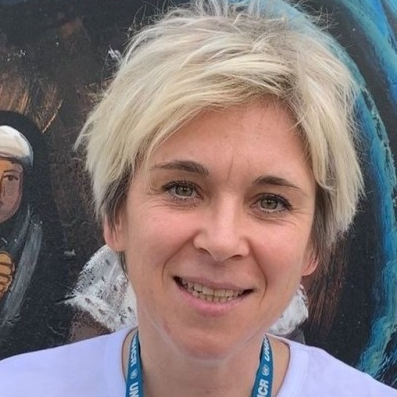
Melinda Good

Melinda Good is the World Bank Division Director for Thailand and Myanmar, based in Bangkok. Prior to this role, she was the Country Director for the World Bank in Kabul, Afghanistan, where she oversaw the country program, working with international partners to support the Afghan people. Before her tenure in Afghanistan, Melinda was the Operations Manager in Islamabad, Pakistan overseeing a portfolio of IDA and IBRD lending and guarantees. Melinda has also worked in the World Bank’s Washington, D.C., and Indonesia offices, and with the Asian Development Bank in Manila, Philippines, and the Millennium Challenge Corporation in Washington, D.C. Melinda began her career as a lawyer in private practice in New York and Singapore, working on project finance and equity transactions in Asia.

Abul Azad

Nopphol Witvorapong

Nopphol Witvorapong is a professor of Economics and currently serving as Dean of the Faculty of Economics, Chulalongkorn University in Bangkok, Thailand. He specializes in health and family economics. His research interests include health behavior modifications, social capital, aging issues, public health insurance systems, simultaneous equation modeling, and program evaluation. He’s authored numerous articles in prestigious national and international economic journals. He holds a B.A. and M.A. in Philosophy, Politics and Economics from the University of Oxford, U.K., and M.Sc. in Economics from the  University of Bath, UK, and a Ph.D. in Economics from the University of North Carolina at Chapel Hill, USA.

Abul Azad

Olivier Dupriez

Olivier Dupriez is the Deputy Chief Statistician of the World Bank Group. He is an advisor to the World Bank’s Development Data Group on issues related to data management and analytics. He led on a work program focusing on exploiting metadata standards, machine learning, and natural language processing models to improve data and knowledge discoverability, and he is also a contributor to the development of software applications for data documentation, anonymization, and dissemination. Olivier joined the World Bank in 2004 to establish the International Household Survey Network (IHSN). Among his previous engagements, Olivier worked for four years as a Poverty Statistician with the Asian Development Bank.

Abul Azad

Ozong Agborsangaya-Fiteu

Ozong Agborsangaya-Fiteu is Chief Operations Officer of the Transition States Coordination Office at the African Development Bank. She has nearly three decades of experience advancing innovative solutions for sustainable development in countries affected by fragility, conflict, and institutional challenges. Prior to joining the African Development Bank in 2021, she spent 10 years at the World Bank Group as a Senior Operations Officer, leading strategic, analytical, and operational initiatives in countries facing heightened social, security, and fiduciary risks. Earlier in her career, she managed a diverse portfolio of governance, peacebuilding, and development programs across several international institutions. She began her professional career at The Carter Center, where she served as Program Coordinator and provided
technical support to former U.S. President Jimmy Carter’s peace initiatives.

Abul Azad

Paskorn Boonyalug

Paskorn Boonyalug currently serves as Deputy Permanent Secretary and Chief of the Operation Centre for Displaced Persons (OCDP). In this capacity, he has played a key role in bringing issues related to Myanmar displaced persons into dialogue, across government agencies. He has been instrumental in advancing the Right to Work policy and ensuring its successful implementation. In his civil service career, he has progressed to senior executive positions, serving as District Chief of Mueang Phitsanulok, and Deputy Governor of Chiang Rai Provinces. He has also served as Governor of Chiang Rai, Krabi, Pathum Thani, and Rayong Provinces and the Director-General of Department of Disaster Prevention and Mitigation (DDPM).

Abul Azad

Rachael Beaven

Rachael Beaven is the Director of Statistics Division at UN Economic and Social Commission for Asia and the Pacific, a role she has held since November 2021. Prior to that she had worked in the UK government for over thirty years including leading the Data for Development Team at the Foreign, Commonwealth and Development Office of the United Kingdom, where she managed a global portfolio of statistical programmes to build core statistics as well as helped countries modernize their statistical systems. She is one of the founders of the Inclusive Data Charter and established a data science hub with the Office for National Statistics in the United Kingdom. Ms. Beaven holds Master’s degrees in Statistical Applications in Business and Government as well as Business Administration, and a Bachelor’s degree in Geography and Geology. 

Abul Azad

Raouf Mazou

Raouf Mazou took up his appointment as UNHCR’s Assistant High Commissioner for Operations on 1 February 2020, having joined the organization in 1991. His various assignments have enabled him to garner expertise in such areas as emergency response, repatriation, and the development of strategies aimed at bridging the gap between relief and development. Mazou previously served as Director of UNHCR’s Africa Bureau in 2019 and as UNHCR Representative in Kenya for over five years. In the four years immediately preceding this assignment, he was a Deputy Director in the Africa Bureau, covering the East and Horn of Africa. Other senior positions he has held at UNHCR include Deputy Director of the Division of Operations Support and Head of the Emergency and Security Service, a role in which he oversaw the organization’s global emergency management and staff security interests. Mazou joined UNHCR in 1991 in the Great Lakes Region and subsequently served in West Africa, supporting the agency’s response to the Liberian and Sierra Leonean refugee crises

Abul Azad

Tammi Sharpe

Tammi Sharpe has been the Representative of UNHCR in Thailand since April 2024. She has more than 27 years of UN experience, with postings in Africa, the Middle East, Asia, UNHCR Headquarters, and the UN Secretariat in New York. Her expertise covers humanitarian protection, peacebuilding, reconciliation, the humanitarian-development nexus, external relations, resource mobilization, and management. Prior to joining the UN, she worked with the U.S. Catholic Conference and volunteered as a U.S. Peace Corps Volunteer in Senegal.

Abul Azad

Volker Schimmel

Volker Schimmel is the Head of UNHCR’s Global Data Service, in Copenhagen. Having worked on conflict and displacement research and policy in London, he joined the UN in 2003 starting with UNHCR in the Great Lakes. He then worked with OCHA, rolling out the Field Information and Data Management System, and with the UN Relief and Works Agency for Palestine Refugees in the Near East (UNRWA) on camp improvement projects and innovative solutions to protracted displacement. Since 2012, when he rejoined UNHCR, he has worked in the Middle-East region and was then appointed Deputy Head of the World Bank – UNHCR Joint Data Center on Forced Displacement.

Abul Azad

Winida Albertha

Winida Albertha is a Senior Statistician at BPS-Statistics Indonesia with over 20 years of experience. She currently coordinates a cross-functional working group comprising multiple teams dedicated to modernizing Indonesia’s national statistical system through data integration and innovation in migration/mobility statistics, as well as in Civil Registration and Vital Statistics. She also contributes to the development of Indonesia’s integrated socio-economic data to strengthen Indonesia’s social assistance targeting programs. 

Organizers