

The Royal Thai Government has begun issuing official identity cards to refugees from Myanmar living in temporary shelters along the Thai–Myanmar border. This milestone builds on the Government’s August 2025 resolution, which allows registered refugees in the nine shelters to access legal employment.
For Saw Eh Shee, 18, the card could make his first job possible. Born in a temporary shelter after his parents fled conflict in Myanmar, he wants to join relatives employed at a food manufacturing facility.
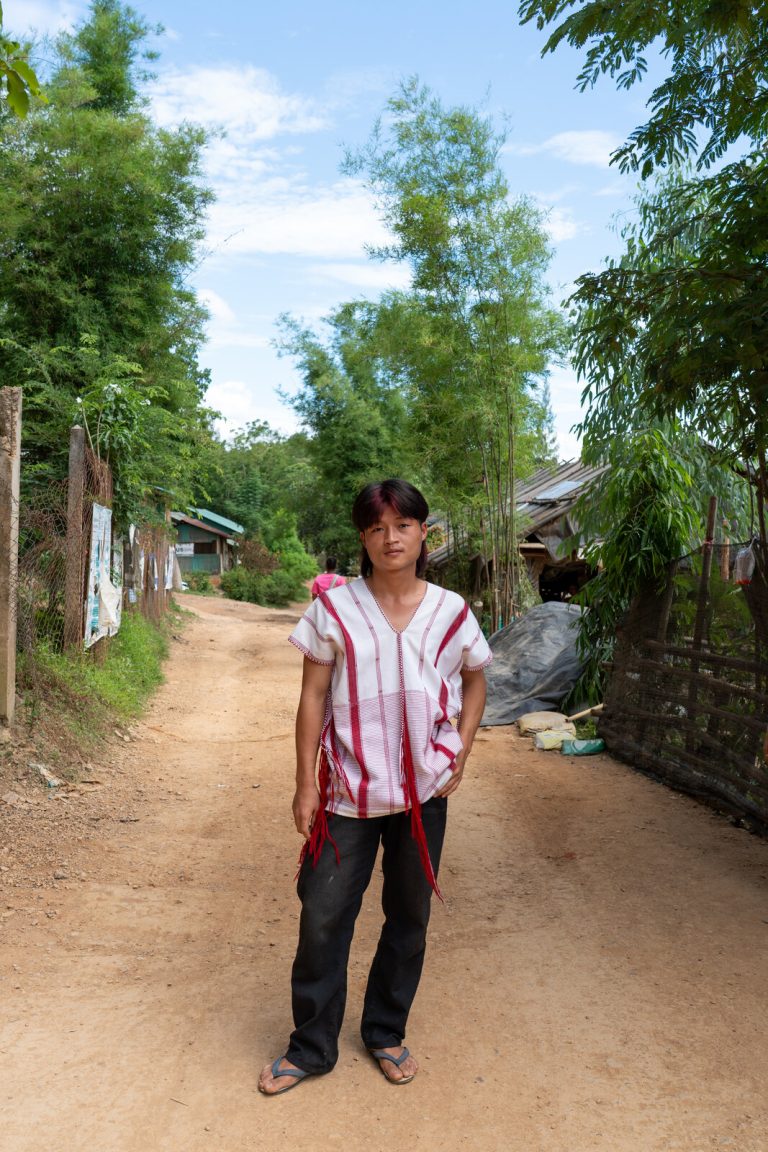
“I’m excited. With the ID card, I can work and earn money,” he says. “With a job, I can support my parents who live in the camp.”
Saw Eh Shee is one of around 80,000 forcibly displaced people from Myanmar living in temporary shelters along the border. Many have lived there for decades and remain dependent on humanitarian assistance. Around 45 per cent were born there.
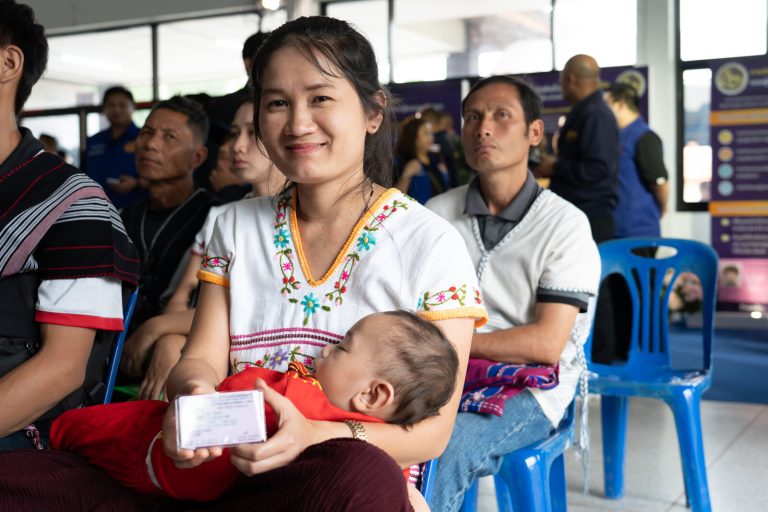
The official, non-Thai identity cards are being issued in phases to people over the age of five, beginning with those currently employed. They formally recognize holders as “Myanmar Displaced Persons” and provide the documentation needed to take up legal work.
Ku Gu Sher, 29, arrived in Thailand as a child after conflict forced her family to flee their village in Myanmar. She is now married, has four children and balances caring for her youngest baby and elderly parents with tending livestock in the shelter.
“Life is different now. Food rations have decreased, but we have more opportunities to work outside the camp, which gives me hope,” she says.
She plans to seek legal employment when her youngest child is older, while her husband also intends to start working.
From policy to self-reliance
The first identity cards were issued as the 4th World-Bank-UNHCR Joint Data Center (JDC) Research Conference on Forced Displacement was taking place in Bangkok in June 2026. Thailand’s decision gave immediate relevance to wider research-based discussions about what enables people in protracted displacement to become more self-reliant.
One clear finding from the JDC conference was that no single intervention produces self-reliance. In Thailand, the resolution and identity cards bring two essential elements together: legal access to employment and the documentation needed to exercise it. For that opportunity to translate into secure work, people must also be able to reach available jobs; employers need clear procedures and access to the skills they require; and employment must connect to financial services, public services, and functioning local markets. Coordination between government and the private sector provides an important foundation for this in Thailand.
Evidence for 50 by 35
Whether legal access to work translates into greater self-reliance goes to the heart of UNHCR’s 50 by 35 target: to support more than half of the world’s aid-reliant refugees in long-term displacement in low- and middle-income countries—nearly eight million people—to move beyond aid through greater self-reliance and pathways to solutions by 2035.
Knowing whether that is happening requires evidence. Joint Data Center-supported socioeconomic data and analysis have already built a substantial evidence base on forcibly displaced people and host communities, providing an advanced baseline for assessing whether people can meet their essential needs without external support. By helping more than 25 countries include forcibly displaced people in national statistical systems, the JDC has also strengthened the nationally owned systems needed to update that baseline and track change over time.
Thailand has opened an important door. For Saw Eh Shee, it offers the prospect of a job and the chance to support his parents. The next question is who can walk through it, what still stands in the way, and whether legal recognition leads to greater self-reliance.